Health Problems Aspirants Face Before Typing Exams, Real health problems boys and girls face while preparing for government typing exams – eye strain, wrist pain, sleep loss, period-related issues – with practical solutions. Months of typing practice, long hours at a screen, and constant exam pressure take a real physical and mental toll – one that rarely gets talked about honestly. Both boys and girls preparing for government typing exams report a similar pattern: eye strain, aching wrists, disturbed sleep, and stress that builds quietly until it affects performance. Some challenges are shared, and a few are specific to each. This guide lays out the real problems candidates commonly face and practical, safe ways to manage them without letting health issues derail your preparation.
Why Long Practice Hours Take a Toll on the Body
Typing practice is repetitive by nature – the same finger movements, the same seated posture, and the same close-range screen focus for hours at a stretch. Over weeks and months of preparation, this repetition adds up in ways that pure typing speed practice doesn’t account for.
Common Physical Problems Among Aspirants
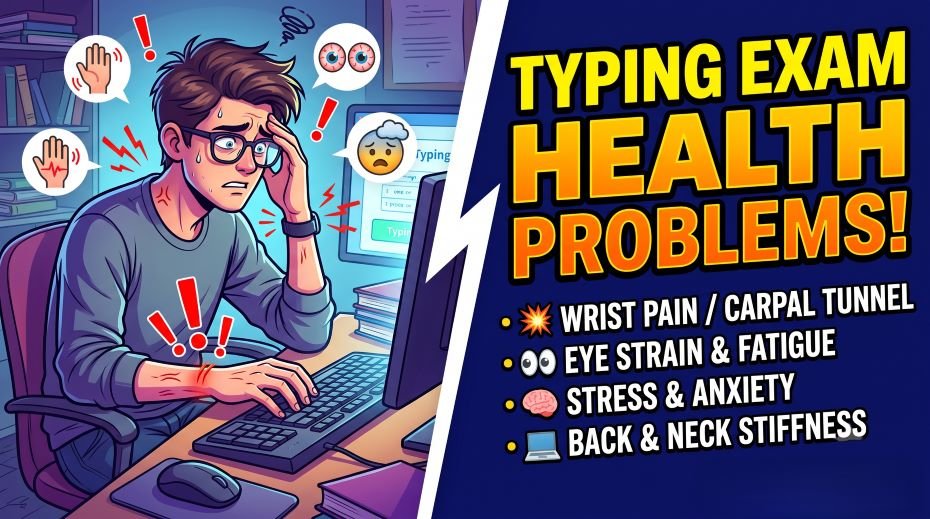
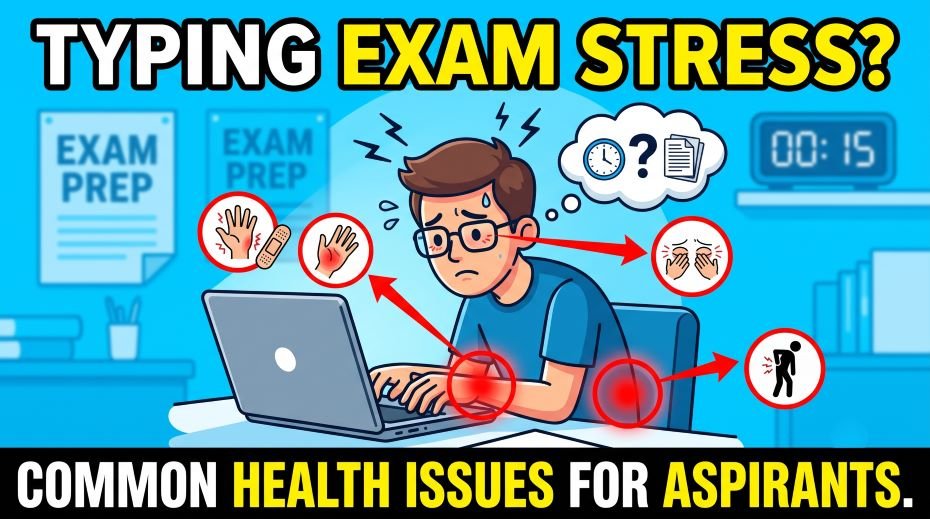
Several physical complaints show up repeatedly among candidates preparing intensively for typing tests, regardless of gender. Prolonged repetitive keystrokes without adequate breaks are a well-recognised contributor to repetitive strain injury, a category of pain and discomfort in the wrists, hands, and forearms caused by repeated motion.
| Problem | Common Cause | Practical Solution |
| Eye strain and headaches | Extended close-range screen focus without breaks | Follow a 20-20-20 rule: every 20 minutes, look at something 20 feet away for 20 seconds |
| Wrist and forearm pain | Repetitive keystrokes over long unbroken practice sessions | Take a 5-minute stretch break every 45–60 minutes; keep wrists flat, not angled |
| Neck and back stiffness | Poor seating posture during long practice sessions | Use a chair with back support; keep screen at eye level rather than looking down |
| Disturbed sleep | Late-night practice sessions and pre-exam anxiety | Set a fixed practice cut-off time at least an hour before bed |
| Frequent headaches or fatigue | Combination of screen time, stress, and irregular meals | Keep meal timing consistent; don’t skip meals during intensive practice weeks |
Health Challenges More Common Among Girls
A few challenges come up more specifically for girls preparing for and appearing in timed exams, and they deserve honest, practical discussion rather than being brushed aside.
- Exam dates sometimes fall during a period, which can bring cramps, fatigue, or discomfort that affects concentration and hand steadiness.
- Iron-deficiency fatigue is relatively common among young women and can compound tiredness from long study hours – this is worth checking with a doctor if fatigue feels persistent rather than occasional.
- Travel safety concerns for exam centres in unfamiliar areas can add a layer of stress that male candidates typically don’t factor in as heavily.
- Balancing household expectations alongside preparation time is a real, if often unspoken, added pressure for many girls in this process.
On the exam-day period question specifically: comfortable, well-fitting sanitary protection suited for a long sitting period, a mild pain reliever if you normally use one (following your own doctor’s guidance), and a light, iron-rich breakfast can meaningfully reduce discomfort. This is a normal part of the menstrual cycle and not something to feel that you have to hide or push through silently – plan for it practically, the same way you’d plan for any other exam-day logistic.
Health Challenges More Common Among Boys
- A tendency to skip stretch breaks and push through long practice sessions without pause, leading to more pronounced wrist and back stiffness over time.
- Higher reliance on caffeine or energy drinks during late-night preparation, which can disrupt sleep quality further and increase next-day fatigue.
- Underreporting stress or physical discomfort due to social pressure to appear unaffected, which can delay addressing a genuine problem until it becomes more serious.
- Irregular eating patterns during intensive practice phases, often skipping meals to fit in more practice time, which affects both energy and focus.
also read: What to Eat and Drink Before a Typing Exam (Government)
The Mental Load Behind the Physical Symptoms
Physical discomfort and exam stress usually feed each other – tension in the shoulders and wrists increases with anxiety, and physical fatigue in turn makes it harder to stay calm. Recognising this loop early helps prevent it from building silently over months of preparation.
- Persistent tiredness that doesn’t improve with a good night’s sleep is worth paying attention to rather than pushing through indefinitely.
- If stress starts affecting appetite, sleep, or mood consistently rather than just occasionally, it’s worth talking to a doctor, counsellor, or someone you trust rather than treating it purely as a productivity problem to fix with more practice.
- Isolating yourself entirely during preparation months often increases stress rather than reducing distraction – regular contact with family or friends tends to help more than it hurts.
Building a Sustainable Practice Routine
- Break practice into focused 45–60 minute blocks with short stretch and eye-rest breaks in between, rather than marathon sessions.
- Keep a consistent sleep schedule through your preparation months, not just in the final week before the exam.
- Maintain regular meal timing even during intense practice weeks; skipped meals affect concentration more than an extra hour of practice helps.
- Include light physical activity – a short walk or basic stretching – in your daily routine to counter the effects of prolonged sitting.
- Track how your body feels weekly, not just your typing speed, so early signs of strain don’t go unnoticed until they become painful.
When to See a Doctor
- Wrist, hand, or forearm pain that persists beyond rest and stretching, or that affects your grip strength.
- Headaches or eye strain that don’t improve with breaks and reduced screen time.
- Menstrual pain severe enough to regularly interfere with daily functioning, not just mild discomfort.
- Fatigue or low mood that persists for more than two weeks despite adequate sleep and rest.
Do’s and Don’ts
| Situation | Do | Don’t |
| Long practice sessions | Take a short stretch and eye-rest break every 45–60 minutes | Don’t practice for hours straight without any break |
| Sleep | Keep a consistent sleep schedule through preparation months | Don’t rely on last-minute all-nighters before the exam |
| Period on exam day | Plan practically with comfortable protection and familiar pain relief | Don’t ignore persistent pain or push through severe discomfort silently |
| Stress and fatigue | Talk to someone you trust if it persists beyond two weeks | Don’t treat ongoing exhaustion as something more practice will fix |
| Meals during practice | Keep regular meal timing even during intense weeks | Don’t skip meals to fit in extra practice time |
Quick Fact Table
| Issue | Practical Fix |
| Eye strain | 20-20-20 rule during every practice session |
| Wrist/forearm strain | Stretch breaks every 45–60 minutes, flat wrist posture |
| Sleep disruption | Fixed practice cut-off time before bed |
| Period-related discomfort | Plan protection and pain relief in advance, don’t push through silently |
| Persistent fatigue or low mood | Consult a doctor if it lasts beyond two weeks |
Table 1: Health Issues, Causes, Solutions & Where to Seek Help
Months of intense typing practice combined with exam stress take a real physical toll on aspirants – from wrist strain to eye fatigue and disturbed sleep. Left unaddressed, these health issues can actually hurt exam performance more than lack of practice does. Below is a breakdown of common health problems aspirants face while preparing, practical solutions, and where to seek help when self-care isn’t enough, along with real examples from fellow candidates.
| Health Issue | Cause | Solution / Tip | Where to Seek Help |
|---|---|---|---|
| Wrist/hand pain (early signs of RSI) | Prolonged daily typing practice without breaks | Take short breaks every 20-30 minutes; do wrist stretches; maintain correct hand posture | Consult a doctor if pain persists beyond a few days |
| Eye strain / dry eyes | Long hours staring at screen during practice | Follow the 20-20-20 rule (every 20 min, look 20 feet away for 20 seconds); blink consciously, reduce screen brightness | Consult an eye specialist if symptoms persist |
| Neck and back pain | Poor posture and unsuitable chair/desk height during practice | Sit with proper back support, screen at eye level, feet flat on the floor | Consult a physiotherapist for persistent pain |
| Sleep disturbance / insomnia | Exam anxiety and late-night practice sessions | Fix a consistent sleep schedule; avoid screens right before bed; wind down with light stretching or reading | Consult a doctor if insomnia continues for weeks |
| Headaches | Screen fatigue, stress, or dehydration during long practice hours | Stay hydrated, take regular breaks, ensure adequate lighting while practicing | Consult a doctor if headaches are frequent or severe |
| Loss of appetite / irregular eating | Exam stress and long practice hours disrupting routine | Set fixed meal times regardless of practice schedule; keep light snacks handy | Consult a doctor/nutritionist if appetite loss is prolonged |
| Increased anxiety / restlessness | Pressure of limited attempts and high competition | Break practice into manageable sessions; include short physical activity or walks daily | Consider speaking with a counselor if anxiety feels overwhelming |
| Finger/joint stiffness | Repetitive keystrokes without adequate rest between sessions | Do hand and finger stretches before and after practice sessions | Consult a doctor if stiffness or swelling continues |
| Weight gain/loss from sedentary prep routine | Long sitting hours with reduced physical activity | Include at least 20-30 minutes of daily physical activity alongside typing practice | Consult a doctor/nutritionist for guidance if concerned |
Table 2: Real-Life Examples
| Candidate Situation | What Happened | Outcome / Lesson |
|---|---|---|
| Aspirant practiced 4-5 hours daily without breaks | Developed persistent wrist pain a month before the exam | Started taking short breaks every 25 minutes and doing wrist stretches; pain reduced significantly |
| Candidate stared at screen for long practice sessions without breaks | Experienced frequent headaches and dry, strained eyes | Adopted the 20-20-20 rule and reduced screen brightness during practice |
| Aspirant practiced late into the night before exams | Struggled with poor sleep and felt groggy on exam day | Shifted practice to earlier hours and fixed a consistent sleep routine |
| Candidate skipped meals regularly while focused on practice | Felt low energy and difficulty concentrating during mock tests | Set fixed meal times independent of practice schedule; concentration improved |
| Aspirant sat in a slouched position during long practice sessions | Developed persistent neck and back discomfort | Adjusted chair/desk setup for proper posture; discomfort reduced over a few weeks |
| Candidate’s anxiety about limited exam attempts led to constant restlessness | Sleep and appetite both got affected in the weeks before exam | Added short daily walks and breathing exercises; found noticeable relief in stress levels |
Note: This content is for general awareness only and isn’t a substitute for professional medical advice – persistent or severe symptoms should always be evaluated by a doctor.
FAQ:
Is wrist pain during typing practice normal?
Mild, occasional tiredness in the hands after long sessions is common, but persistent or sharp pain is not something to push through. Regular breaks and correct wrist posture prevent most cases; ongoing pain is worth checking with a doctor.
What if my exam date falls exactly during my period?
This is a common and manageable situation. Comfortable protection suited for a long sitting, familiar pain relief if you normally use it, and a light iron-rich breakfast typically help. If pain is usually severe for you, discuss this with a doctor well before exam season rather than only on the day.
How do I balance intensive practice with staying healthy?
Structured practice with regular breaks, consistent sleep, and steady meals almost always outperforms unstructured marathon sessions, both for health and for actual typing improvement. Treating rest as part of preparation, not a break from it, tends to produce better results.
Typing speed is only one part of exam readiness – a body that’s rested, hydrated, and free of preventable strain, and a mind that isn’t quietly running on empty, matter just as much. Build breaks and basic self-care into your practice routine from the start rather than treating health as something to deal with only after it becomes a problem, and don’t hesitate to involve a doctor when something persists beyond what rest alone can fix.